

Progressive Tendon Loading: The Long-Term Solution for Tendon Pain
If you’ve ever dealt with Achilles pain during runs, a cranky patellar tendon after pickup basketball, or lingering discomfort in your elbow from pickleball or strength training, you’ve experienced what many active adults know too well — tendon pain can be incredibly frustrating and stubborn. In the past, the common advice was simple: rest it until it stops hurting. But the more we learn, the clearer the picture becomes. Tendons don’t just passively heal with rest — in many cases, excessive rest can prolong the problem. Tendons respond to load, adapt to it, and are healthier because of it.
What Exactly Is a Tendon — and Why Does It Matter?

A tendon is the durable, rope-like tissue that connects muscle to bone and transfers force so movement can happen. Every time you take a step, pick up a grocery bag, push off for a jump, or swing a racket, your tendons are doing the behind-the-scenes work. For many adults and recreational athletes, the tendons that most commonly become painful are the Achilles tendon at the heel, the patellar tendon at the front of the knee, the gluteal tendons near the hip, the rotator cuff in the shoulder, and the tendons around the elbow often labeled “tennis” or “golfer’s” elbow. These are spots most people recognize because they are asked to handle repetitive force and store energy day after day.
To visualize how tendons function, imagine the spring on a pogo stick. When you land, the spring absorbs and stores energy; when you rebound upward, it releases that stored energy to propel you forward with less effort. Tendons work the same way — especially during running — allowing us to move efficiently by storing and returning energy rather than relying solely on muscle power.
However, just like that pogo stick spring, a tendon only stays efficient and resilient when it is consistently challenged. Tendons adapt more slowly than muscle because they have less blood flow, so when loading stops for long stretches — whether due to injury, rest, or fear of making things worse — the tendon doesn’t get stronger. Instead, it becomes less tolerant to stress and more sensitive when activity ramps back up. This is why so many people feel relief during rest but end up frustrated when pain quickly returns as soon as they resume normal activity.
Why Tendon Pain Doesn’t Always Mean Damage — and Why Rest Isn’t the Solution
When tendon pain shows up and refuses to go away, it’s natural to assume something is tearing or breaking down. However, pain doesn’t always reflect structural damage. Imaging often shows changes like thickening or irregularity in people with zero pain, while others with significant discomfort may display very little on MRI. In many cases, tendon pain is more about sensitivity than failure — the tendon and nervous system signaling, “This is more stress than I’m currently ready for.”
That’s an important mindset shift, because experiencing pain during activity does not automatically mean you’re making the problem worse. Tendon ruptures are far less common and typically occur in specific situations: sudden explosive force, prior degenerative changes, or risks linked to certain medications such as fluoroquinolone antibiotics or repeated corticosteroid injections. For most active adults and recreational athletes, continuing to move — with gradual, well-planned loading — is not only safe, it’s essential for recovery.
Where problems tend to become more serious is when someone rests completely for long stretches and then jumps straight back into intense activity. Without progressive loading, the tendon becomes less resilient and more reactive, widening the gap between what it’s being asked to handle and what it’s prepared to tolerate. That’s where the risk increases, and why “stop everything until it’s gone” often backfires.
Rest alone may reduce symptoms in the short term, but it does not rebuild capacity. When you return to running, lifting, or sport, the tendon is no better equipped than before — sometimes even less so. The goal isn’t merely to eliminate pain; it’s to create a stronger, more capable tendon than the one you started with. That’s where strategic strength training and progressive loading become part of the solution, not something to avoid — teaching the tendon to manage stress again, one layer at a time.
How Tendons Heal — and Why Loading Is the Driving Force
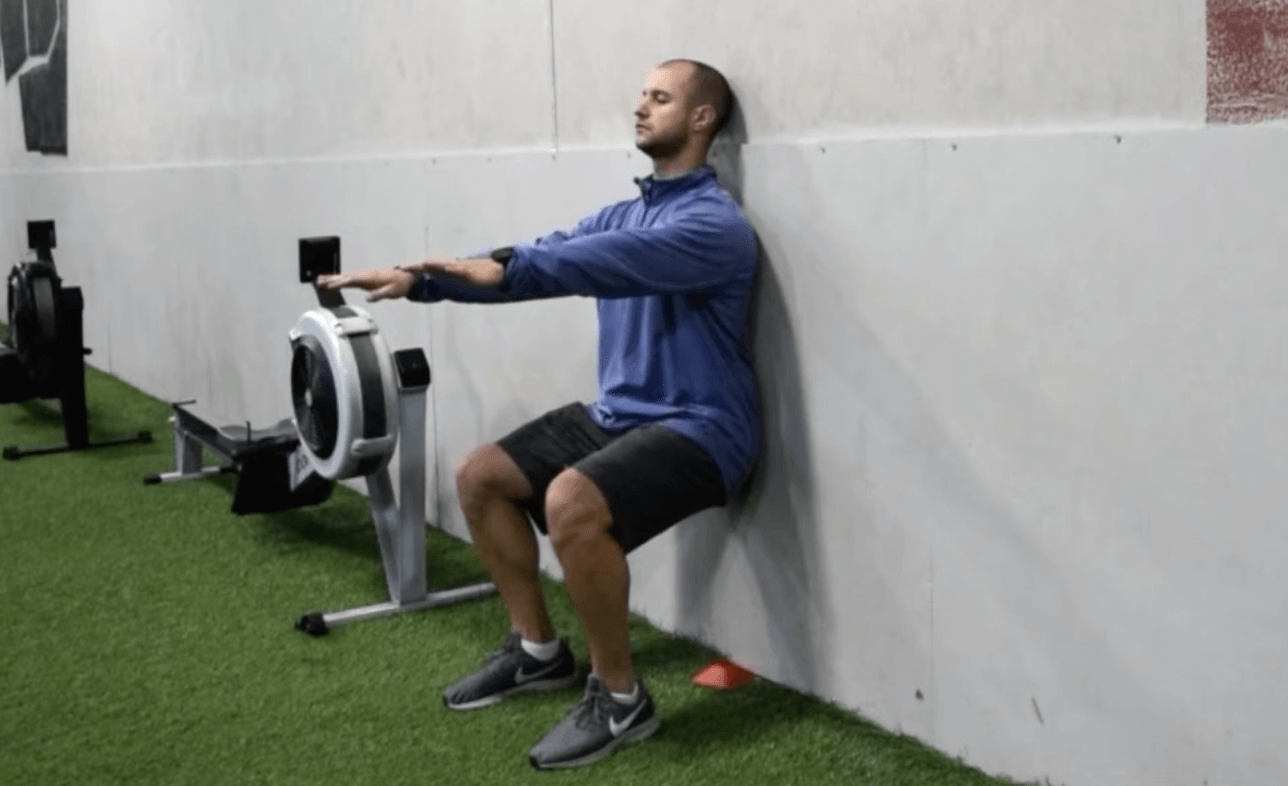
Tendon rehab isn’t about randomly strengthening the area — it’s about applying the right type of load at the right time. Early on, this may look like isometrics, which are exercises where the muscle contracts without movement — such as pushing into a wall, holding a calf raise at the top, or maintaining a static squat position. These can help reduce pain and calm sensitivity while still keeping the tendon engaged.
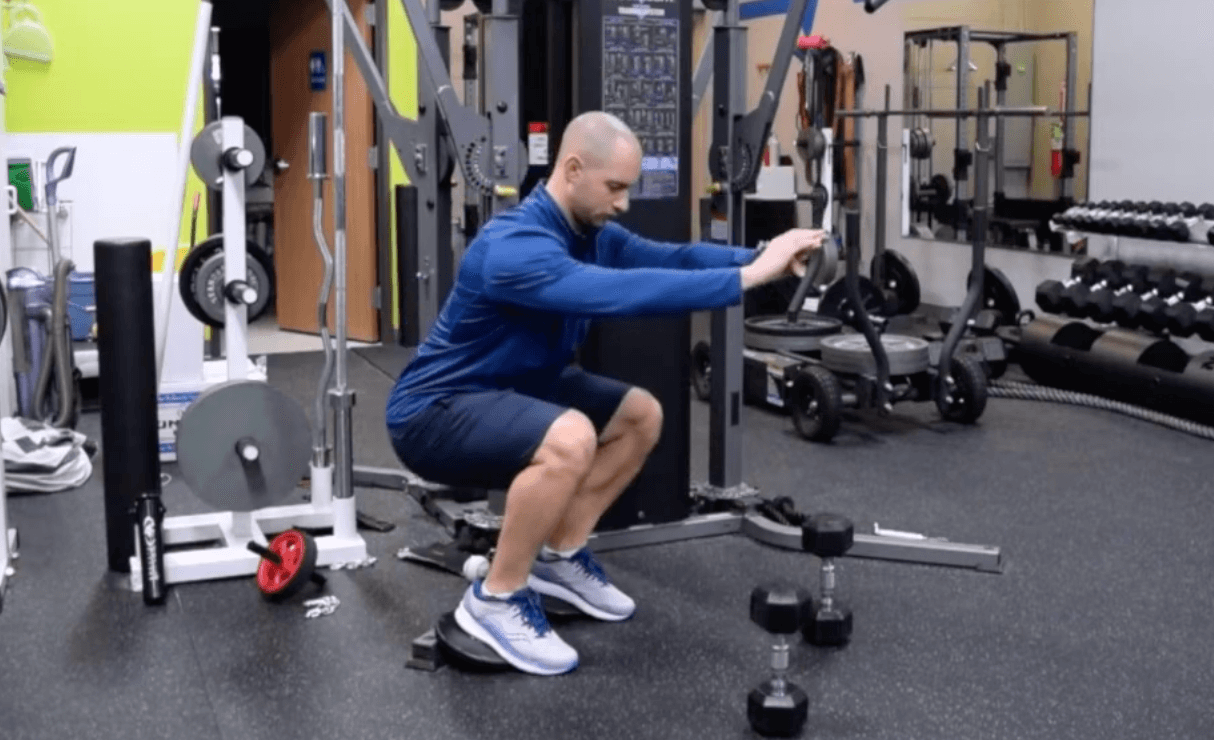
As symptoms improve, we transition to heavy slow resistance, which might include controlled heel-elevated squats, deadlifts, step-downs, or heavy weighted calf raises performed slowly through a full range of motion. The goal here is to stimulate collagen remodeling — helping the tendon become stronger and more organized so it can handle real force again.
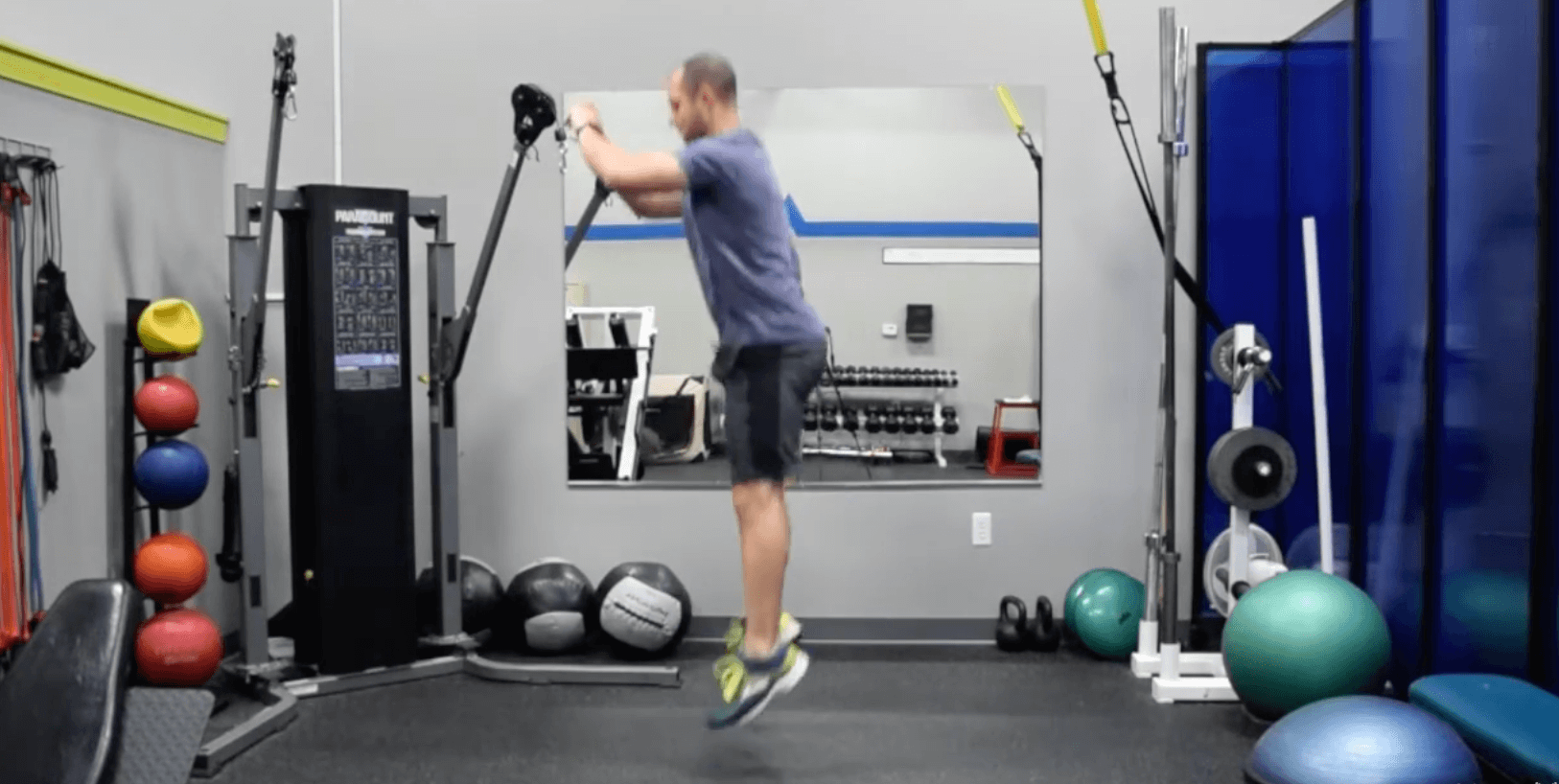
For runners and athletes, rehab isn’t complete until we reintroduce plyometrics — exercises that involve jumping, bounding, or rapid change in direction. This may include jump rope, low box jumps, hopping drills, or short bouts of faster running. This phase reinforces the “pogo stick” function of the tendon, training it to store and release energy efficiently.
One of the most important aspects of tendon rehab is the timeline. Tendons adapt much more slowly than muscles. It’s not uncommon for runners I work with to require six to twelve months of progressive loading. During this time, symptoms typically improve, activity becomes more manageable, and running continues — but the tendon keeps adapting behind the scenes. Exercise helps manage symptoms in the short term, but it’s the long-term progression — and the consistency — that truly resolves the issue.
When people understand this from the start, success is measured not just by “Is the pain gone?” but by improvements in strength, tolerance, confidence, and performance. That shift in expectations is often the difference between frustration and a steady, rewarding return to doing what they love.
The Goal Isn’t Just Rehab — It’s Return to Sport and Real Life
My approach isn’t just to get someone pain-free during therapy — it’s to build a tendon that can handle whatever “real life” throws at it. For runners, this means reintroducing speed, hills, and volume. For active adults, it means returning to workouts without second-guessing every step, squat, or jump. For those who simply want to live pain-free, it means being strong enough to engage in the activities they love with confidence.
This process blends rehab, strength training, and performance coaching. Tendon recovery is not just a medical problem — it’s a training problem.
Your Tendons Were Built to Be Used — Not Avoided
If you’re dealing with tendon pain, the solution is rarely found in complete rest or quick fixes. It comes from understanding how tendons work and following a progressive, patient, and intelligent approach to loading.
You don’t have to navigate that process alone. Whether you’re returning from injury, working back into running or sport, or simply want to build a stronger foundation for an active life, I help people rebuild strength with a plan that makes sense for their body and goals.
If tendon pain is limiting what you enjoy, I’d be happy to talk. The right plan can not only help you feel better — it can help you move better and stay active for the long term.
If you’re currently dealing with tendon pain or are unsure how to safely return to running, sport, or training, I’d love to help guide that process. I offer one-on-one injury rehab, return-to-sport coaching, and personalized strength training programs designed to rebuild confidence and long-term resilience. If you’re ready to take the next step, reach out, send me a message — and let’s develop a plan that gets you back to moving, performing, and living without limitations.